
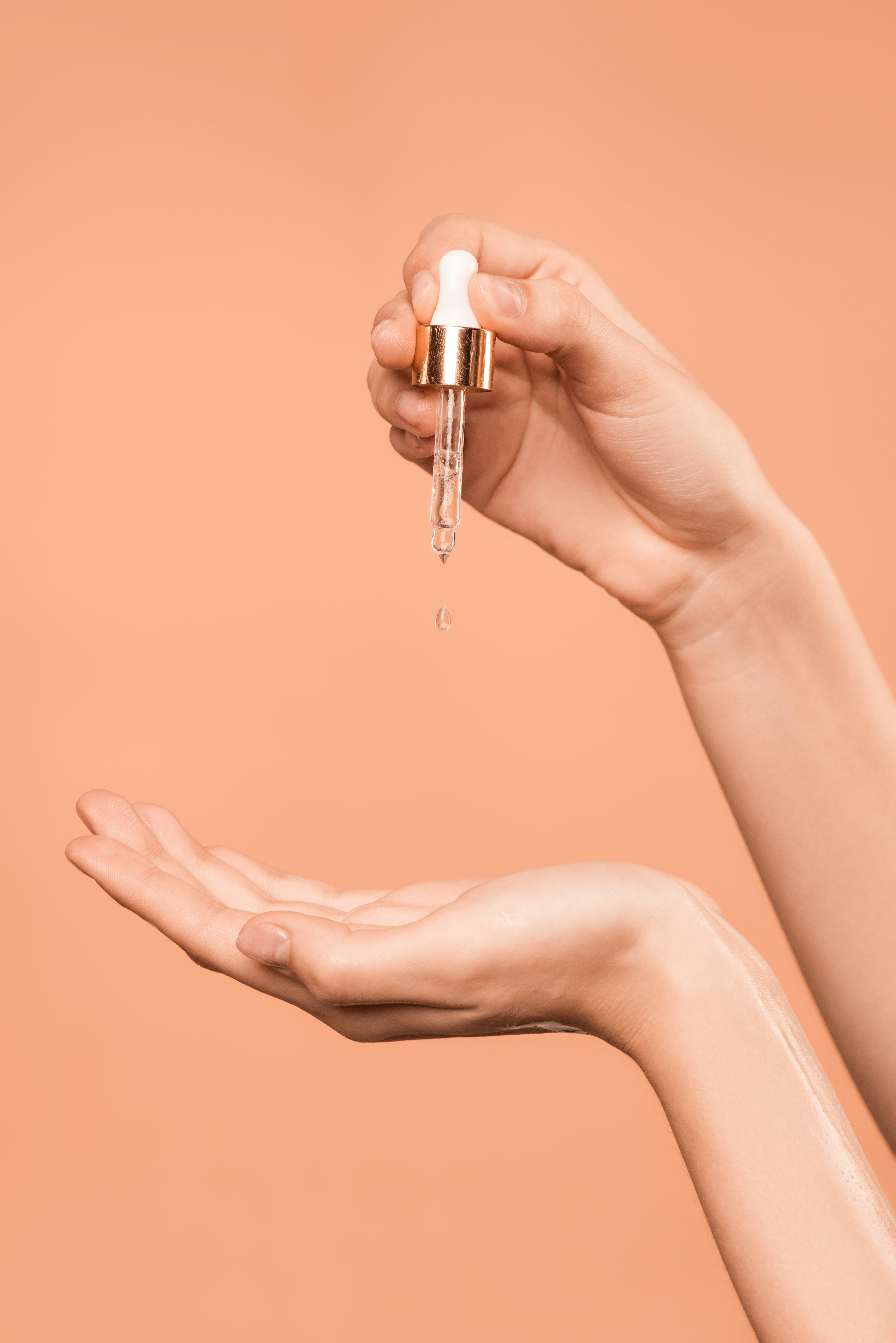

There’s so much hype with serums currently and they play a major role in Supple Skin chemical peel treatments so we want to enlighten you more about them as well as how to incorporate them in your skincare routine.
A face serum is a formula that contains a high volume of active ingredients. Serums can specifically target one concern or a combination of them. A serum does not contain as many ingredients as a cleanser or moisturizer. Instead, it has more potent actives that more deeply and efficiently penetrate the skin. Your skin will reap the rewards of a concentrated formula that will give your complexion the boost it needs.
Different Types of Face Serums
Whether you want to target fine lines, dark spots, or dry skin, a properly formulated serum can deliver results with regular use. The following are the most common types of facial serums you will find.
1. Anti-Aging Serums
Anti-aging serums can help prevent or lessen the appearance of fine lines and wrinkles. These usually contain actives such as retinol (vitamin A) and niacinamide (vitamin B3). Opting for a serum with retinol will help stimulate cell turnover, which begins to slow down by the time you enter your 30s.
2. Brightening Serums
Brightening serums are designed to target hyperpigmentation and reduce discoloration. These serums often contain ascorbic acid (vitamin C), an antioxidant that inhibits the enzyme responsible for melanin production. Niacinamide is another popular ingredient for fading dark spots and evening skin tone.
3. Hydrating Serums
Hydrating serums provide an extra boost of moisture for your skin. They’re used in conjunction with regular moisturizers. Hyaluronic acid is the most common ingredient found in hydrating serums. The Skin Revamp and Glow serum from Supple skin can be found accompanying most of the chemical peel kits because It has hyaluronic acid and Vitamin C. With both ingredients you are to have brighter, supple glowing skin.
4. Exfoliating Serums
To prevent your skin from falling victim to dullness and breakouts, exfoliating regularly is encouraged. Exfoliation comes in two forms: physical and chemical. A physical exfoliant is a grainy scrub that can be used to manually remove dead skin cells. However, this can be too harsh for anyone with sensitive skin or acne-prone skin. A chemical exfoliant, meanwhile, is a less abrasive alternative that is typically produced in serum form.
Exfoliating serums contain alpha-hydroxy acids (AHAs), beta-hydroxy acids (BHAs), or poly-hydroxy acids (PHAs). TCA is a popular AHA that treats skin at the surface level by removing dead cells. Salicylic acid is a common BHA that goes beyond the skin’s surface to clear pores of blackheads, blemishes, and other impurities.
5. Firming Serums
Firming serums target sagging skin. A decrease in collagen, elastin, and ceramide (moisture) production in your more mature years is often the cause behind loose, coarse skin. Thus, incorporate a serum that is formulated with ingredients that will promote collagen production (such as retinol and niacinamide) and boost hydration (like hyaluronic acid).
When to Use Face Serums
Not all face serums are created equal. Active ingredients play a major role in determining whether you should be using a serum in your daytime or night-time skincare routine.
Day Serums
A facial serum containing vitamin C is best used during the daytime. Since vitamin C is an antioxidant, it’s capable of protecting your skin from free radicals and other pollutants while you’re out and about. Also, when used in conjunction with daily sunscreen, vitamin C can save your skin from photodamage such as fine lines and dark spots. (As vitamin C can make your skin more photosensitive on its own, however, SPF is a must.)
Night Serums
While a retinol serum could be applied and worn during the day, it’s preferred you use it at night, especially if you’re introducing this ingredient to your skincare routine for the first time. Similar to vitamin C, retinol makes your skin extra sensitive to sunlight. Daily sunscreen is necessary if you choose to work this ingredient into your skincare routine.
Exfoliating acids (AHAs/BHAs/PHAs) should be used in your nightly routine, as well. These acids increase your skin’s sensitivity to UV, so make sure you adequately protect your skin from the sun during the day.
Anytime Serums
Hyaluronic acid serums can be used to provide additional moisturizing during the day or at night. As we mentioned already, your climate is key when choosing to use this ingredient, as you want to make sure hyaluronic acid can draw moisture from the air and not away from your skin.
Niacinamide serums are also safe to use day or night. Unlike retinol or vitamin C, niacinamide does not make your skin photosensitive.
If you’re new to serums, the experience can be daunting. There are many different types that cater to a number of concerns. However, no matter your skin type, you can benefit from incorporating a well-formulated serum into your skincare routine. When used correctly, serums can become one of the best ways to enhance your natural radiance and beauty.


Leave a Reply